Facilitating futures
In 2022, I facilitated five workshops where people who train healthcare workers imagined their organisation in 2050. Here is what I learned from holding that space.
Between February and May 2022, together with Nina Bozic Yams and Lisa Carlgren, I facilitated a journey of five workshops with a Swedish public academy that trains healthcare practitioners: doctors, midwives, nurses, dentists and more. Each session gathered around twenty people. We were exploring what learning at work will look like in the future, and who will make it happen.
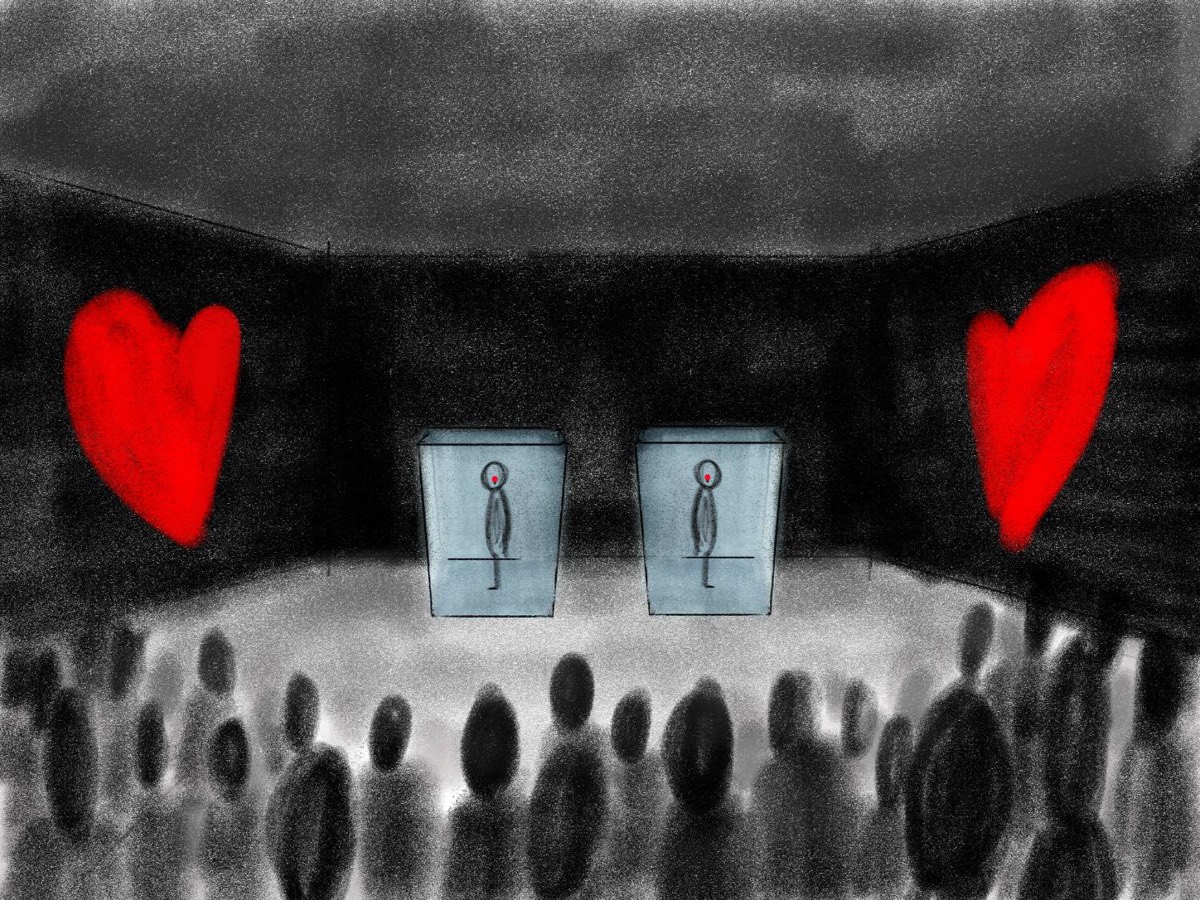
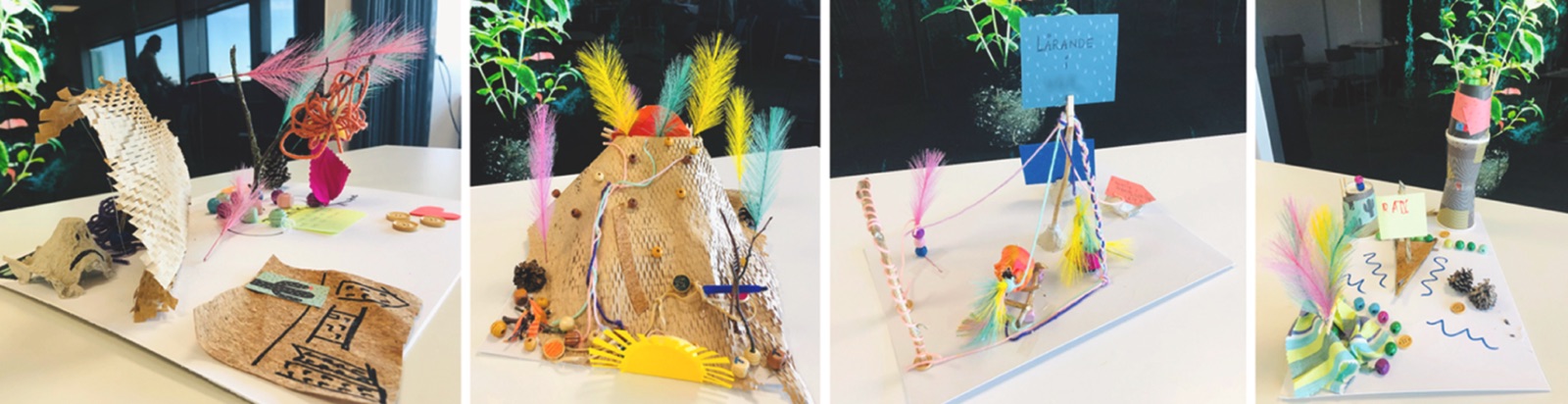
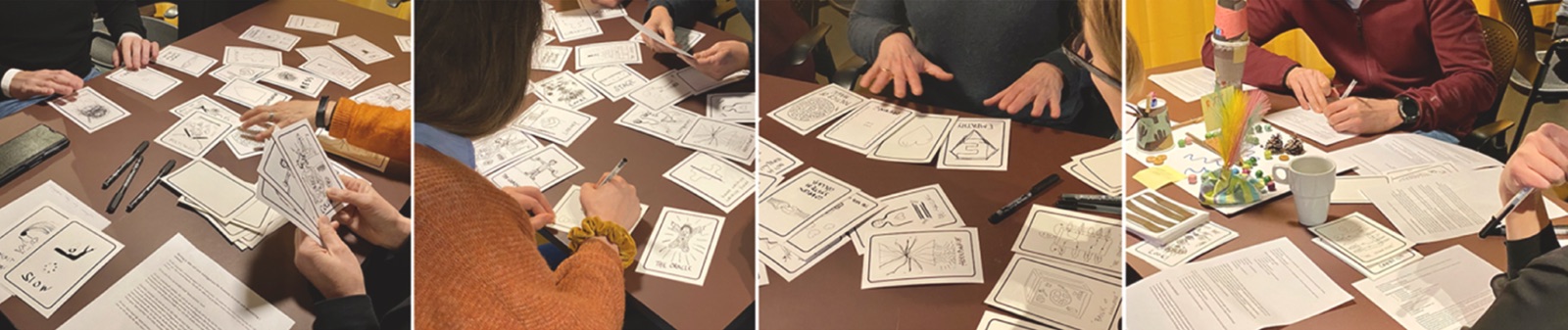
We moved from the present to the future and back again. First, a look at today, with a collage of strengths and wishes for change, and a haiku to close the day. Then stories set in 2050, built as physical models with textiles, feathers and buttons. Then future roles, improvised with a card deck. Then prototypes of technologies for those roles, made with clay and old electronics. And finally, the milestones needed to get from 2050 back to today, acted out in front of the others. We collaborated with the artistic collective Studio Alight, who joined us along the way with readings and performances, such as The Heartists Are Present, that opened other ways of seeing.
What facilitating taught me
The atmosphere comes first. People wrote “fun”, “hope” and “energy” in their feedback, and talked about a place where they could “dare to make mistakes”. Without that, nobody builds a model of 2050 out of feathers in front of their colleagues.
Letting go of today is hard. Participants told us it was “hard to let go of the current situations” at work. Making things with their hands, improvising, and the artistic interventions helped them step out of their comfort zones more than any discussion did.
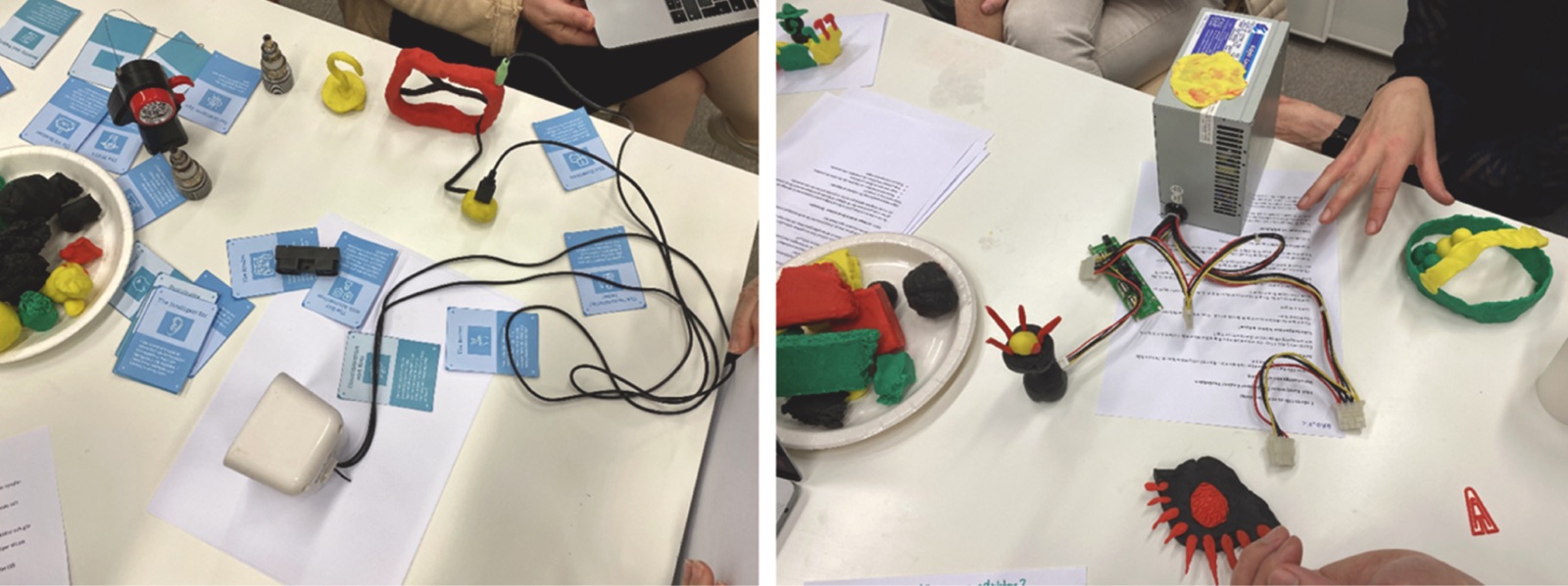
Every prompt nudges. The cards gave stories a structure: a character, a context, a conflict, a resolution and a message. The technology demos inspired people, but they also steered what they imagined. As a facilitator, I am never neutral. The materials I bring shape the futures people see, and I had to keep that tension in mind.
Futures can feel safe or scary. Some participants felt safe, because they were shaping the future themselves. Others felt afraid, especially about technology arriving “just because it’s new and trendy”. Both reactions belong in the room, and the workshop has to make space for them.
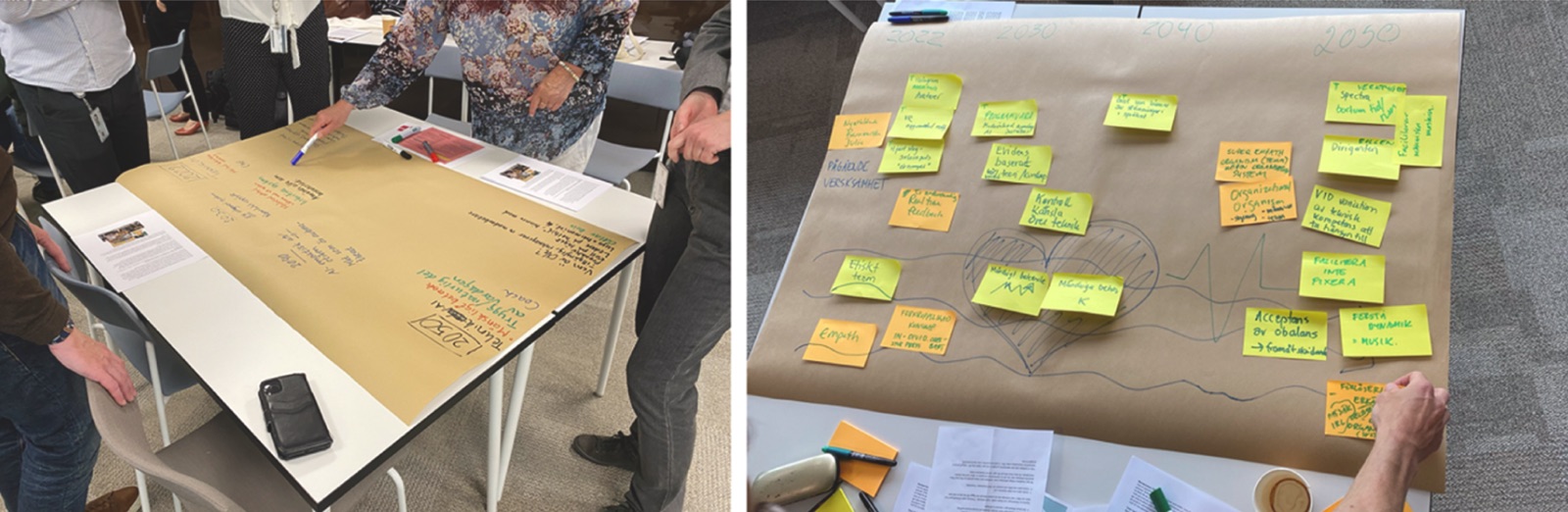
The real outcome is ownership. Many participants had never met before. By the end, they talked about being able to “influence the future”, and they left with action plans: how to share the results, how to keep futures thinking alive, and how to rethink the role of managers in supporting learning.
Read more
- Aranda-Muñoz, Á., Bozic Yams, N., & Carlgren, L. (2025). Co-experiential futuring: Where speculative design and arts meet futures studies. Futures, 166, Article 103549.
- Aranda Muñoz, Á., Bozic Yams, N., & Carlgren, L. (2023). Co-designing technological explorations in developing futures literacy through speculative design and an artistic intervention. Proceedings of the Design Society, 3, 957–966.
- Studio Alight. (2021). The Heartists are present [Performance].